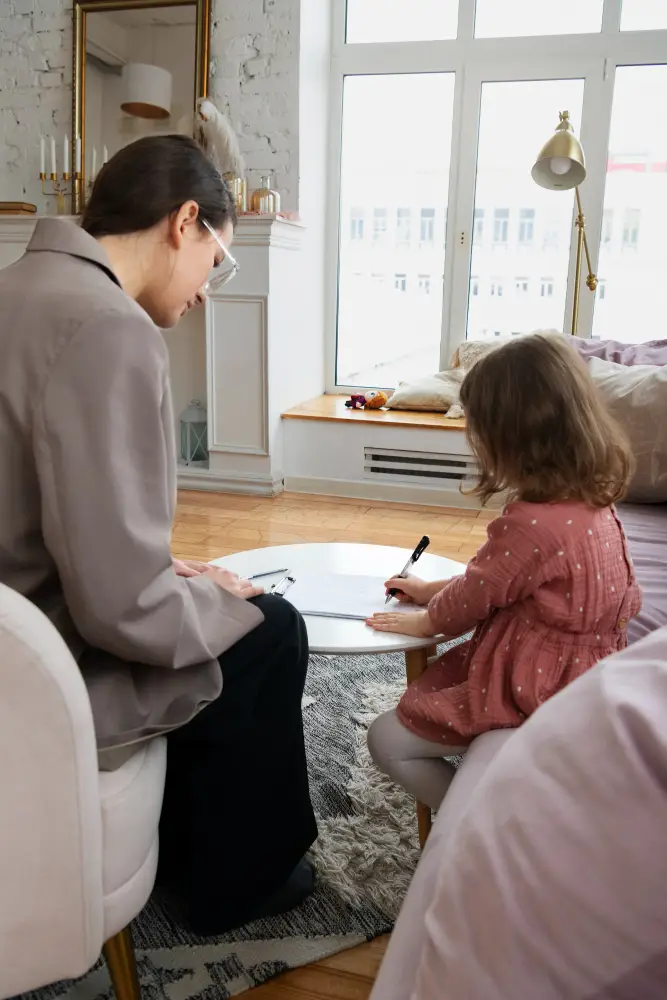
A collaborative therapy approach that helps families rewrite shared stories, reduce conflict, and strengthen resilience together. This work supports deeper connection, healthier communication, and a more unified family identity.
A snapshot of who this therapy is for and how it works
Family conflict, communication struggles, intergenerational trauma, addiction recovery, grief, parenting challenges
Family sessions. In person or virtual
Weekly or biweekly. Session length: 60 to 90 minutes
Typically 10 to 20 sessions depending on family needs
Family systems therapy, Cognitive Behavioral Therapy, Dialectical Behavior Therapy, trauma informed care, group support
Supported by research showing Narrative Therapy improves family relationships, reduces blame, and strengthens resilience

Family Narrative Therapy applies Narrative Therapy principles to the family as a whole. Rather than viewing one person as the cause of problems, this approach externalizes challenges such as conflict, addiction, or grief and helps the family face them together.
Reframe painful events as part of a larger story of growth
Identify strengths and moments of unity across generations
Develop a collective identity grounded in values rather than conflict
Shift from blame to collaboration and shared understanding
Strengthening family bonds by reshaping shared stories together
Reduces blame and tension. Encourages seeing problems as separate from family members.
Improves communication. Helps families practice empathy, curiosity, and healthier dialogue.
Supports trauma healing. Creates safe space for families to process grief or difficult past events.
Builds unity. Helps families co author shared stories that promote long term connection, hope, and stability.
Family sessions are guided by a therapist who ensures every voice is heard. Practices may include:
Shifting language from blame to collaboration. For example: “The conflict is dividing us” instead of “You are the problem.”
Revisiting the family’s history to identify themes of resilience, strength, and connection.
Creating new narratives that reflect hope, healing, and the family’s core values.
Aligning on priorities such as honesty, respect, compassion, or stability.
Building concrete skills for listening, sharing, and problem solving
This therapy supports households who want to improve relational patterns, reduce conflict, or rebuild trust.
Guidance for reducing enabling, blame, or secrecy.
Tools for reframing dynamics that feel stuck or repetitive.
Helps families find meaning and resilience through difficult times.
Supports children and teens through clear, values based communication.
Strengthens bonds across generations or newly blended households.
TruPaths highlights this approach because healing and recovery are strongest when families grow together. Family Narrative Therapy reduces patterns of blame and conflict while helping loved ones rediscover shared meaning, connection, and resilience.
Families can heal together. Family Narrative Therapy provides a path to reduce conflict, reclaim resilience, and build a stronger story of connection.
Recommendations are based on your location and recovery needs, including the programs you've explored, the services you've saved, and the filters you've used. We use this information to highlight similar treatment options so you never miss a trusted path forward.