A supportive, community-based therapy model that uses nervous system awareness and co-regulation practices to help groups heal together.
A snapshot of who this therapy is for and how it works
Trauma, PTSD, anxiety, depression, stress, isolation, recovery communities, group resilience
Group (6–12 participants typical) · In person or Virtual
Weekly or biweekly · Session length: 75–120 minute
Short-term (8-12 sessions) or going peer-support groups
Group CBT, DBT skills group, Somatic Experiencing, mindfulness practices, trauma recovery workshops
Rooted in Dr. Stephen Porges’ Polyvagal Theory and increasingly applied in group therapy and community healing
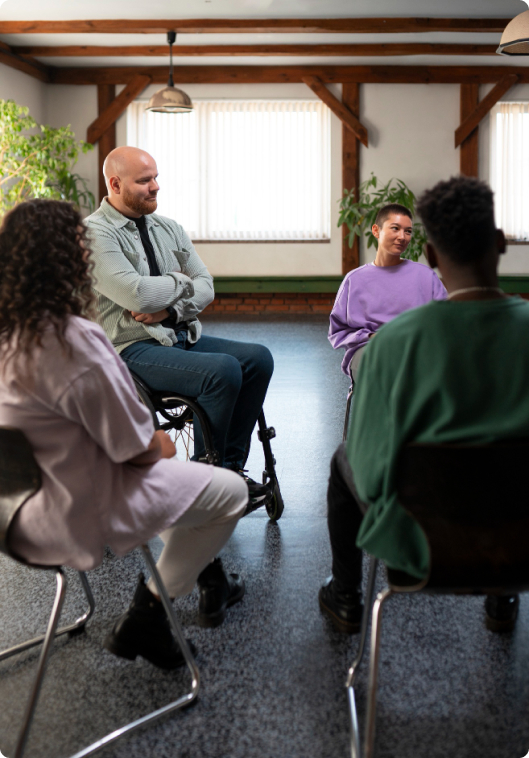
Polyvagal-Informed Group Therapy applies the science of Polyvagal Theory to a group setting, helping participants understand their system states and use co-regulation with others for healing.
Recognize patterns of fight, flight, or shutdown in themselves and peers
Build collective safety through shared nervous system awareness
Practice regulation tools together, such as breathwork, grounding, and gentle movement
Normalize trauma responses by hearing other's experiences
Building safety and regulation through shared awareness
Group members practice calming one another
Communities learn to support nervous system health
Group safety lowers shame and reactivity
Shared practices can be carried into daily life
Group therapy sessions often include:
Learning how the nervous system shapes safety and connection
Breathwork, sound, grounding, or mindfulness together
Identifying triggers and building shared awareness
Pair or group activities for practicing co-regulation
Group sharing, journaling, or calming rituals
Polyvagal-informed group therapy benefits people who experience chronic stress, trauma responses, emotional dysregulation, or feeling of isolation.
Survivors of trauma, neglect, or abuse seeking safety, regulation, and healing
Individuals with anxiety, depression, or stress-related issues
People in addiction recovery or relapse prevention
Communities impacted by collective trauma or crisis
Anyone seeking supportive, relational healing in a group format
TruPaths highlights this approach because healing often requires community as much as individual work. Polyvagal-Informed Group Therapy empowers participants to co-regulate, build safety, and recover together.
Healing grows stronger in community. Polyvagal-Informed Group Therapy helps participants build safety, resilience, and trust through shared regulation and connection.
Recommendations are based on your location and recovery needs, including the programs you've explored, the services you've saved, and the filters you've used. We use this information to highlight similar treatment options so you never miss a trusted path forward.