
Recovery from substance use problems is often less about a single breakthrough and more about sustained follow-through under pressure. People may know what to do, yet struggle to do it consistently when cravings spike, stress increases, or old environments pull them back toward familiar habits. Effective support has two jobs. It must reduce clinical risk through appropriate medical and behavioral health care. It must also help a person rebuild a daily life that can support recovery.
Recovery coaching refers to structured, nonclinical support that helps people translate recovery goals into practical routines. The work is typically action-oriented and anchored in a working plan, not in diagnosis or psychotherapy. Coaching can be delivered by peers with lived experience, by coaches with specialized training, or by professionals embedded in a treatment system in roles focused on engagement and continuity. This support is most useful during transitions. The period after detox or after a return-to-work requirement can become a high-risk gap. Coaching can help close that gap by preventing small setbacks from turning into full disengagement. The safest model treats coaching as a coordination layer around evidence-based care. When the client needs stabilization, referral to clinical services is the responsible first step. When the client needs day-to-day structure, coaching can add meaningful value.
Coaching-Based Recovery Support
Coaching-based recovery support is a collaborative relationship that helps a person build a safer, more stable life that makes substance use less likely and less rewarding. Many models focus on the period when a client is trying to sustain behavior change outside of a protected environment. Others focus on long-term maintenance and relapse response. Sobriety coaching usually signals an abstinence-oriented goal. Abstinence becomes feasible when daily routines and social environments change. Coaches often spend time working on sleep protection, dealing with triggers, rebuilding social support, planning for weekends and travel, and setting boundaries with people who still use substances.

Coaching scope often includes practical tasks that sound simple but are hard in early recovery. Examples include building a weekly schedule that includes meals and sleep, developing a plan for loneliness hours, creating scripts for declining alcohol in social settings, and setting a plan for what to do after a slip so the client returns to care quickly. Coaching can also support families. In many households, families want to help, yet they become stuck between enabling and policing. A coach can help family members set boundaries, avoid unhelpful monitoring, and develop a shared safety plan. Peer recovery coaches walk side by side with people seeking recovery, helping develop individualized recovery plans and pathways while providing emotional and social support.
How Coaching Differs from Therapy and Treatment
Effective referrals start with clear role boundaries. The question is not which approach is better. The question is which approach is authorized and competent to address the client’s primary need and current risk level. Clinical care refers to services provided by licensed or credentialed health professionals operating within defined scopes of practice. For substance use and associated mental health conditions, this can include:
- withdrawal management
- medication options for cravings and relapse prevention
- psychotherapy
- assessment of co-occurring disorders
- coordinated care planning
Coaching is different in both aim and method. Coaching focuses on execution and life integration. It supports behavior change through planning. The phrase therapy vs. recovery coaching is helpful when it is used as a boundaries tool. Therapy can address symptoms and diagnoses through clinical assessment and evidence-based interventions. They can support the client in using those interventions outside sessions, staying engaged with care, and building routines that make treatment outcomes more durable.
Referral partners can use a triage lens. Medical and safety needs lead first. Severe withdrawal, overdose risk, severe intoxication, suicidal intent, hallucinations, and acute medical instability require emergency or medical response. Coaching can support follow-through after stabilization, but it cannot be the first-line service.
Clinical treatment needs lead next. Trauma processing, persistent depression, panic, obsessive behavior, and severe functional impairment require licensed behavioral health treatment, sometimes alongside medication management.
Life integration needs lead last. When safety and diagnosis are addressed, clients often need help building a life that fits recovery. That includes education, work, parenting routines, sober social life, and healthy coping skills. In this bucket, coaching can be central. The table below summarizes decision points without assuming that any single service is sufficient on its own.
| Client need | Lead service type that usually has authority | What coaching can add safely | Escalation signals |
| Medical stabilization | Medical team | Logistics and linkage to next step | Severe withdrawal, overdose history without safety plan |
| Diagnosis and psychotherapy | Licensed behavioral health clinician | Between-session skills practice | Suicidal intent, psychosis, rapidly worsening function |
| Medication decisions | Prescriber | Adherence support and appointment follow-through | Pressure to stop medications without prescriber oversight |
| Daily routines and recovery capital | Client with support team | Coaching can lead | Rapid relapse risk increase requiring treatment review |
Common Coaching Titles
It is safer to evaluate scope, safeguards, and training than to assume a title means the same thing across settings.
- A sober coach commonly focuses on abstinence planning and relapse prevention habits. The role is effective when it remains within nonclinical boundaries and coordinates with clinical care as needed.
- A sober companion often implies more hands-on support, sometimes including in-person accompaniment during high-risk periods. This can raise safety and boundary issues because the work may occur in private settings and may involve transportation or travel. Clear policies help, including a written scope, confidentiality expectations, and crisis escalation steps.
- An addiction coach is a broad label that can describe very different services. Some people use it to describe peer recovery support. Others mean general life coaching focused on substance-related behavior. The referral decision should be based on actual competencies, supervision, and integration into treatment, not on the label.
- A trauma recovery coach may focus on stabilization skills such as pacing and daily coping routines. Trauma processing and diagnosis-based interventions should remain the responsibility of a licensed clinician.
- An online sober coach can expand access for rural clients, clients with disabilities, and clients whose schedules make in-person support hard. Virtual services underscore the importance of a clear emergency plan, as the provider is not physically present during a crisis.
Service Integration Across the Recovery Continuum
Recovery coaching is most credible when it is integrated into a broader plan rather than treated as a stand-alone fix. Integration means the coach understands where the client is in the continuum of care and coordinates communication through informed consent. Many clients enter care through crisis. The first decision is safety. A medical assessment helps determine whether withdrawal management is needed. Once the client is stable, a clinical assessment helps choose the appropriate level of treatment. Some people need residential care. Some can start with outpatient treatment plus medication and therapy. The highest-risk point is often the transition between these settings, when structure drops faster than resilience rises.
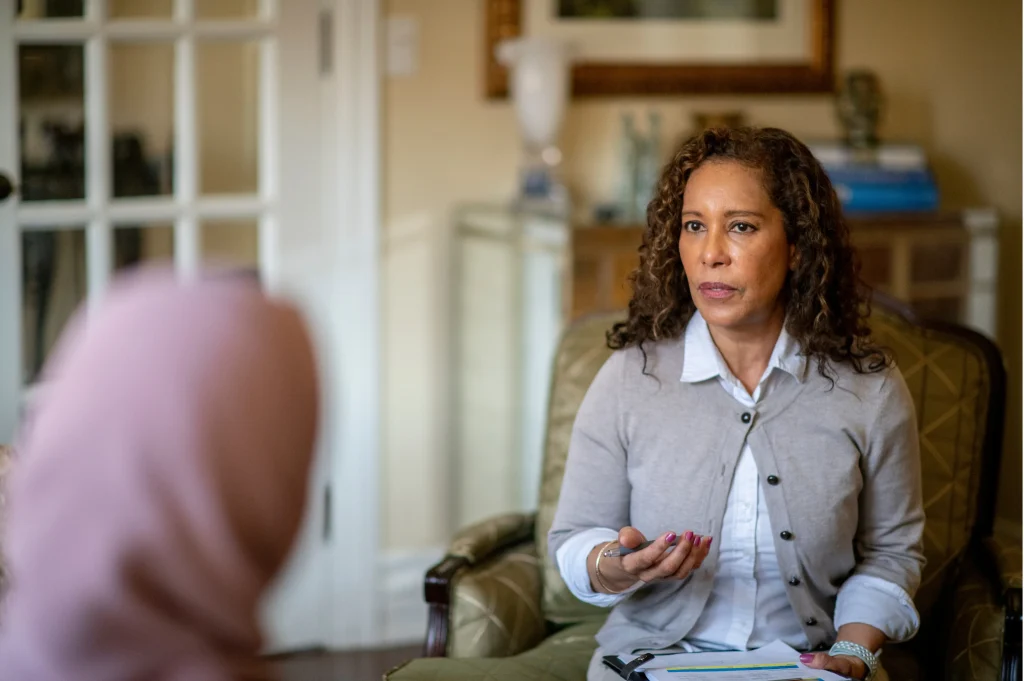
Coaching can help transitions in three practical ways. It can speed linkage to care by helping schedule, prepare for, and attend initial appointments. It can protect discharge by building a realistic weekly plan that includes sleep, meals, movement, treatment sessions, supportive meetings, and time for work and family. It can reinforce long-term maintenance by reviewing goals and building a life rich enough that return to use becomes less reinforcing.
The service labels that clients use are often imprecise. Detox and rehab are not interchangeable. Detox refers to medical stabilization and withdrawal management. Rehab generally refers to structured treatment services, including residential or intensive outpatient options. Coaches can support linkage and follow-through, but detox and clinical treatment decisions must be made by licensed professionals.
Housing is another common gap, with sober living houses providing a structured, substance-free environment where residents can practice recovery habits while rebuilding work and social life. They are not medical treatment, yet they can be an essential bridge when the home environment undermines recovery. Co-occurring symptoms are also central. Mental health treatment includes psychotherapy, psychiatric evaluation, and evidence-based approaches for mood, anxiety, trauma-related symptoms, and other conditions that frequently interact with substance use and relapse. In that system, recovery coaching services can supplement treatment by providing coordination when clinical teams are not present. Virtual options can expand continuity and connection. Online sobriety support can include coaching sessions, peer communities, and skill-based groups. The safety requirement is that escalation pathways are clear and local emergency resources are identified.
Credentialing, Ethics, Legal, and Safety Considerations
Because coaches often talk with clients between clinical appointments, safety planning is a core competency. Credentialing is best treated as a risk-management signal rather than a guarantee. Recovery coach certification can refer to state peer credentials or private training certificates. Ethical practice begins with informed consent. Clients should hear, in plain language, what the coach does and what the coach does not do. That conversation should happen before sensitive disclosure, not after.
Coaching often happens in the community. Coaches may share recovery spaces with clients. In some roles, a coach may be asked to provide transportation or to be present in the home. These situations require explicit boundaries to prevent dual relationships, financial conflicts, and coercive dynamics. They should have a written crisis protocol that includes local emergency contacts, an overdose response plan, and steps to connect the client to clinical services rapidly. In regions where naloxone is widely available, coaches and families often include it in safety planning, but medication and medical decisions remain outside coaching scope.
Workplace and legal contexts sometimes add requirements that coaching cannot replace. In safety-sensitive transportation settings, a substance abuse professional is a defined evaluator role within federal rules, and the client may be required to complete that process in addition to treatment and recovery supports.
Coaching may be private pay or funded when delivered as part of a peer workforce within a healthcare system or community organization. Instead of asking whether insurance covers coaching in general, it is more useful to ask what billing model applies in that jurisdiction and setting, and whether the coach is part of a billable peer support service.
Below is a credential comparison that can help clients and referral partners interpret what a credential signal may mean.
| Credential signal | What it may indicate | Limits that still apply | Verification questions |
| State peer credential | Training and ethics aligned to a state framework for peer work | Still nonclinical and not a substitute for psychotherapy | What supervision exists and how is crisis risk handled |
| Employer credentialing | Role-defined training and protocols inside a system | Scope depends on employer policy and team structure | Who supervises the role and how is documentation handled |
| Private training certificate | Completion of a course or program | Quality varies and may not include supervision | What competencies were tested and what ongoing supervision exists |
| Clinical license | Ability to diagnose and provide psychotherapy within scope | Coaching may still be useful for life integration | How will therapy and coaching coordinate with client consent |
Evidence-based and Expected Outcomes
An evidence-informed view avoids two extremes. One extreme treats coaching as a miracle fix. The other dismisses coaching because it is nonclinical. A more useful approach asks which outcomes coaching is most likely to influence through plausible mechanisms.
Coaching improves treatment engagement and continuity. Many clients struggle at the follow-through level. They miss intake appointments. They cannot navigate transportation. They drop out after a difficult group session. A coach can address these barriers in real time. The coach can also reduce shame after lapses by emphasizing rapid re-engagement rather than secrecy. When a client leaves withdrawal management or residential care, the next appointment is often days away. Coaching can shorten the gap by supporting immediate linkage to outpatient care, medication follow-up, and community supports. That is not a substitute for clinical services. It is a bridge that increases the probability that the client actually receives them.
Quality-of-life outcomes should be treated as legitimate targets. Improvements can include fewer emergency visits, safer relationships, and increased self-efficacy. These outcomes matter even when abstinence is not perfectly continuous. A small set of outcomes can be tracked ethically with consent. Overly invasive monitoring can erode trust and unintentionally recreate surveillance dynamics that many clients have experienced from courts and employers.
Hiring, Referrals, and Best Practices for Clients and Providers
The benefits of hiring a recovery coach are meaningful only when it is tied to a clear problem statement. Coaches tend to add the most value when the client needs structure and real-world skills practice more than they need diagnostic assessment. Start by defining the job to be done, as most coaching goals fall into a few categories.

One category is transition protection, such as the first sixty days after leaving a structured program. Another category is re-engagement after a lapse. A third category is social rebuilding, which includes building sober friendships, meaningful routines, and healthier family patterns. Next, align roles. The client should know which clinician or prescriber leads medical and therapy decisions. The coach should know exactly what is in scope, including scheduling, routine development, and support network development. Then evaluate risk. If the client is at high risk for withdrawal complications, refer first to medical and clinical services.
Knowing how to find a recovery coach often leads to broad online results. A safer approach is to start with referral pathways that already screen, such as treatment programs, healthcare systems, and state peer credentialing resources. Online search can still help, but it is most effective as a verification step.
Treat the search for sobriety coaches as a verification process. Confirm identity. Ask for training details. Ask for a supervision structure. Ask for a crisis protocol. Ask what happens when a client relapses. Promises of guaranteed results should be treated as a warning sign. Families often say they want to find a recovery coach because they are exhausted and scared. A coach can support families, but the coach should not become the family’s enforcement arm. Healthy coaching supports client agency while helping families develop boundaries and a shared safety plan.
Clients and providers should also evaluate web presence. Recovery coach websites should clearly state the scope of services, privacy policy, crisis-escalation procedures, qualifications, and how collaboration with clinicians works. If you or someone you care about needs structured recovery coaching, visit TruPaths to confidentially explore vetted care options and take the next practical step toward sustained recovery.
Sources:
- Centers for Disease Control and Prevention. Treatment of Substance Use Disorders. Updated April 25, 2024.
- Substance Abuse and Mental Health Services Administration. Peers Supporting Recovery from Substance Use Disorders. Published 2017.
- Substance Abuse and Mental Health Services Administration. National Model Standards for Peer Support Certification. Released 2023.
- Substance Abuse and Mental Health Services Administration. What are Peer Recovery Support Services. Published 2009.
- American Society of Addiction Medicine. The ASAM Criteria Fourth Edition overview and continuum of care. Accessed 2026.
- U.S. Department of Transportation Office of Drug and Alcohol Policy and Compliance. Guidance on the professional evaluator role in DOT drug and alcohol rule violations. Updated June 6, 2024.
- Eddie D and colleagues. Systematic review on peer recovery support services for substance use disorder. Current Addiction Reports. Published 2025.
- International Certification and Reciprocity Consortium. Peer Recovery PR Exam Candidate Guide. Approved April 2025 with effective date July 2025.