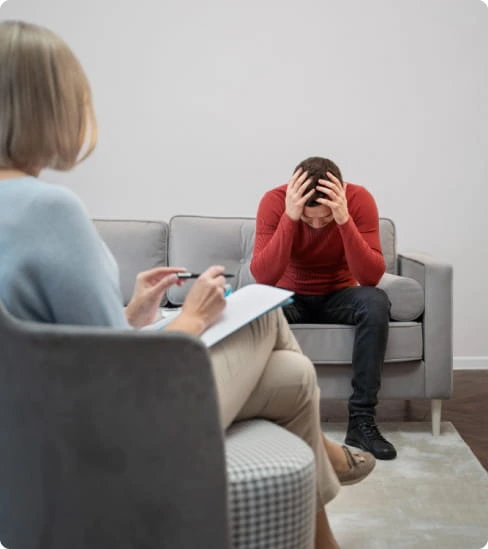
This page is designed to help you understand how hallucinations, paranoia, and psychosis related experiences can present, how they differ from transient stress reactions, and when additional support may be helpful. It is not intended to diagnose or label but to provide clarity and context for experiences that can feel frightening or confusing.
At one end are brief, stress related distortions such as heightened suspicion or fleeting perceptual changes during exhaustion or anxiety. At the other are more sustained experiences where perception, interpretation, or reality testing is significantly altered.
What matters most is not the presence of unusual experiences alone, but their persistence, intensity, and impact on safety, functioning, and wellbeing.
Hearing voices or sounds others do not hear
Seeing shapes, shadows, or figures not present
Feeling sensations on the body without a clear source
Smelling or tasting things without an external cause

Psychosis refers to a state in which perception, thoughts, or beliefs are significantly disconnected from shared reality.
Emotional stress and nervous system responses can strongly influence how a person thinks, remembers, and makes decisions. Ongoing stress, anxiety, or emotional strain can affect concentration, slow problem solving, and make it harder to process information clearly.
Paranoia and distorted beliefs can influence many areas of daily life, including relationships, work, and personal well-being. Individuals may find it difficult to trust others, participate in social situations, or make decisions with confidence.
These experiences often overlap with or are influenced by other factors.
It may be time to seek immediate or medical support when experiences:
Long-Lasting Symptoms
Persist or intensify over time
Fear and Agitation
Cause fear, agitation, or loss of control
Disruption of Daily Functioning
Interfere with basic functioning or safety
Unshared Beliefs or Perceptions
Include beliefs or perceptions others cannot share
Confusion and Physical Symptoms
Are accompanied by confusion, disorientation, or physical symptoms
Many people delay seeking help due to misconceptions.
These experiences mean permanent illness
Talking about symptoms will make them worse
Seeking help means loss of autonomy
Others will not understand or will judge
Support for hallucinations, paranoia, and psychosis prioritizes safety, stabilization, and trust.
Across TruPaths, indicators related to severe perceptual or reality based symptoms are embedded throughout educational and treatment resources.
When medical or psychiatric support may be appropriate
When higher levels of care may be necessary
How acute symptoms fit into broader recovery pathways
Uncertainty is common when performance begins to slip. You do not need to identify a single cause to seek support
Learning about crisis stabilization and treatment options
Reaching out for medical or psychiatric evaluation
Speaking with a trusted professional or guide
Continuing to explore educational resources when safe
If this page resonated, you may also find the following resources helpful:
Hallucinations, paranoia, and psychosis are not moral failures or signs of weakness. They are signals that the brain and nervous system are under significant strain.
With timely, compassionate care, many people regain stability, clarity, and confidence. Support exists to protect safety, reduce fear, and help individuals reconnect with reality in a way that preserves dignity and hope.
Recommendations are based on your location and recovery needs, including the programs you've explored, the services you've saved, and the filters you've used. We use this information to highlight similar treatment options so you never miss a trusted path forward.