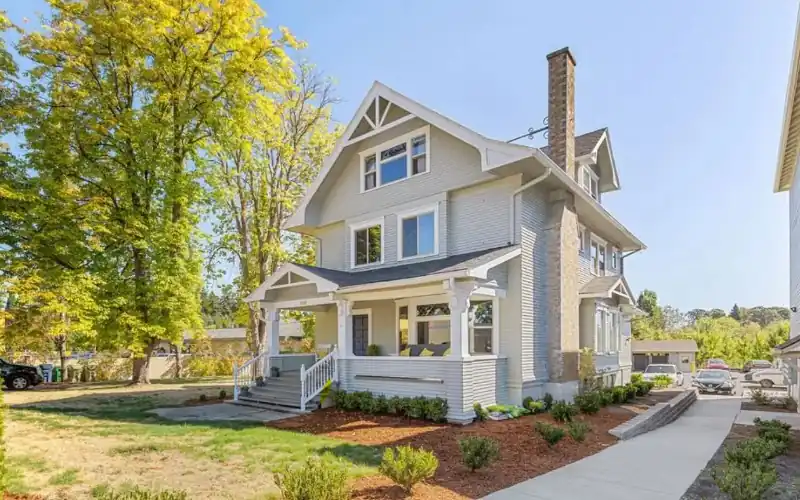
Hazelden Betty Ford Foundation with Updated reply to comment below.
The Good — A Haven for Stability and Healing:
When you walk through the doors, you’re entering a space that radiates safety and care. For many, it’s the first time in a long while they’ve felt secure enough to begin the work of recovery. The culture of compassion here is undeniable — staff advocate fiercely for their patients and build an environment where stability feels possible again. This is a rare and precious thing in a field where instability often dominates.
The Not-So-Good — Chained to an Outdated Playbook:
And yet, the clinical foundation rests heavily on a 100-year-old mythology — the 12-step Alcoholics Anonymous model. Despite mounting scientific evidence challenging its universal effectiveness, the program clings to it as if no other paths exist. The refusal to develop a modern, evidence-based intellectual property is a missed opportunity of staggering proportions. Recovery science has advanced; Hazelden’s curriculum hasn’t kept pace.
The Dead Zone of Creativity — Presentation and Governance:
Then there are the presentation slides: corporate governance packaged in beige monotony. They sap energy instead of sparking it, smothering creativity under layers of bullet points. The material feels like it’s designed to meet compliance checkboxes, not to inspire or engage human beings in the fight of their lives.
Why This Matters:
In a world desperate for treatment programs that are both compassionate and scientifically progressive, Hazelden Betty Ford could lead the charge. The safe, healing atmosphere they’ve mastered is a powerful asset. Pairing that with cutting-edge, adaptable recovery strategies could make them unstoppable. But until they shed the comfort blanket of the past and embrace innovation, they’ll remain a place of safety — but not of evolution.
——————————————
Aug 15 — Response to Hazelden Betty Ford Foundation
I appreciate your reply and the recognition that creativity, personalization, and evidence-based innovation are essential to effective recovery work.
To clarify: my feedback is based on direct, firsthand experience. While I may use digital tools to help organize my thoughts for clarity, the concerns raised are entirely my own and stem from what I observed and experienced within your program. Dismissing structured or well-written feedback as “AI-generated” risks deflecting from the substance of the concerns, and I’d prefer we keep the focus on solutions.
I do not question the commitment of your clinicians — their dedication and compassion are clear strengths. My concern lies in the framework and delivery methods:
• Reliance on the 12-step model. HBFF presents the 12 Steps and 12 Traditions like the Ten Commandments in every lecture room. This is grossly outdated and alienates those seeking a secular, science-based path.
Example: I participated a 60-minute slide deck on AA’s Third Step — content so outdated and theology-bound that I left mid-lecture and sought out an EMDR specialist within HBFF instead, knowing that field is progressive and scientifically grounded without invoking religious mythology.
• The presentation materials and delivery formats are disengaging and do not match the creative or motivational environment needed for transformative learning.
I believe Hazelden Betty Ford has the foundation to be both a safe haven and a leader in modern recovery science — but that requires evolving content, revamping presentation delivery with dynamic, story-driven, and interactive formats will enhance patient learning, staff morale, market perception, and infuse creativity into every level of care.
Opportunity:
Remove the antiquated 12-Step ideology that is framed in every room and present them as one tool in a broad arsenal of recovery systems and modalities. Prominently display the evolution of recovery science, highlight multiple validated pathways, and deliver content in a way that inspires, not numbs.













 Levels of Care
 Programs & Specialization
 Conditions Treated
 Therapies & Modalities
 Accrediations & Licensing
 Amenities & Environment